Did you know a 10‑gallon aquarium holds roughly 38 liters of water—just enough space to host a thriving community if you plan wisely? In this guide you’ll learn the best 10 gallon tank stocking ideas and walk away with a concrete checklist, step‑by‑step setup, and troubleshooting tips that turn a modest tank into a vibrant underwater world.
In This Article
- What You Will Need (Before You Start)
- Step 1 – Cycle the Tank Properly
- Step 2 – Choose a Stocking Theme
- Step 3 – Select Compatible Species
- Step 4 – Arrange Decor and Plants
- Step 5 – Introduce the Inhabitants
- Step 6 – Establish a Maintenance Routine
- Common Mistakes to Avoid
- Troubleshooting & Tips for Best Results
- Summary
- Frequently Asked Questions
What You Will Need (Before You Start)
- Tank & stand: Standard 10‑gallon glass or acrylic tank (10 gal ≈ 30 × 20 × 12 in). A sturdy stand or cabinet that can bear ~40 lb.
- Filtration: Hang‑on‑back (HOB) filter such as the AquaClear 20 (≈ $45) or a low‑profile canister like the Fluval C4 (≈ $70). Aim for 4–5 turnovers per hour.
- Heater: Adjustable 50‑W submersible heater (e.g., Hydor Theo, $25) for tropical setups.
- Lighting: LED fixture with 0.5–1 W per gallon; the NICREW SkyLED (≈ $35) works well for both plants and fish.
- Substrate: 1–2 inches of fine sand (e.g., CaribSea Sea‑Salt, $30 / 40 lb) or planted‑tank soil like Fluval Stratum ($45 / 5 lb).
- Water test kit: Comprehensive kit covering ammonia, nitrite, nitrate, pH, GH, KH (API Master Test Kit, $30).
- Decor & plants: Driftwood, rocks, live plants (e.g., Java fern, $4 per leaf; Amazon sword, $12), and a few hiding spots.
- Cleaning tools: Gravel vacuum, algae pad, magnetic glass cleaner.
Step 1 – Cycle the Tank Properly
Even the best stocking ideas will fail if the nitrogen cycle isn’t established. Fill the tank with dechlorinated water, set the heater to 78 °F (25.5 °C), and start the filter. Add a source of ammonia—either a pinch of fish food or pure ammonia (0.1 ppm daily). Test water every 24 hours using the aquarium water testing guide parameters. When ammonia spikes to ~3 ppm, you’ll see nitrite appear within 2–3 days, then nitrate rise as nitrite falls. Once ammonia and nitrite are both 0 ppm and nitrate stays under 20 ppm, the cycle is complete—usually 4–6 weeks.
Step 2 – Choose a Stocking Theme
With a 10‑gallon footprint you have three reliable themes:
- Community fish tank – a mix of small, active species.
- Planted shrimp biotope – focus on live plants and invertebrates.
- Single‑species showcase – a betta or dwarf cory with appropriate companions.
Each theme dictates the species you can keep without exceeding the 1‑inch‑per‑gallon rule (roughly 10 adult fish of 1 inch each).
Step 3 – Select Compatible Species
Here are the best 10 gallon tank stocking ideas broken down by theme, with price ranges and care notes:
Community Fish Options
- Neon Tetra (Paracheirodon innesi) – 6‑8 individuals, $2–$3 each. Requires soft, acidic water (pH 5.5–6.5).
- Harlequin Rasbora (Trigonostigma heteromorpha) – 4‑6 individuals, $3 each. Tolerates a broader pH (6.0–7.5).
- Endler’s Livebearer (Poecilia wingei) – 5‑6 males, $4 each. Brilliant colors, prolific breeders.
- Pygmy Corydoras (Corydoras pygmaeus) – 4‑5, $6 each. Bottom‑dweller, loves soft substrate.
- Cherry Shrimp (Neocaridina davidi) – 8‑10, $2 for a 10‑count bag. Excellent cleaners, add visual interest.
Planted Shrimp Biotope
- Cherry Shrimp – as above.
- Amano Shrimp (Caridina multidentata) – 6‑8, $8 each. Great algae eaters.
- Snails – Nerite snail (Vittina natalensis), $5 each, helps control algae.
- Live plants – Java moss ($5 per packet), Rotala rotundifolia ($8), and Cryptocoryne wendtii ($7). Provide cover and bio‑film for shrimp.
Single‑Species Showcase
- Betta splendens (Halfmoon) – One male, $12–$20. Keep with snails or shrimp; avoid other aggressive fish.
- Dwarf Cory (Corydoras habrosus) – 4‑5, $7 each. Works with a betta if plants offer plenty of hiding places.
One mistake I see often is pairing neon tetras with a betta; the betta’s territorial behavior can stress the tetras, leading to fin‑nipping and disease.
Step 4 – Arrange Decor and Plants
Start with a 1‑inch layer of sand, then add a thin (<1 cm) sheet of nutrient‑rich substrate if you plan a planted tank. Place driftwood (e.g., LOTUS driftwood, $15) on one side to create a visual focal point. Add smooth river rocks (Seachem PowerRock, $10 per bag) for grazing fish. Plant foreground species like Java fern and Cryptocoryne first; they root on wood and rock, reducing substrate disturbance.
Step 5 – Introduce the Inhabitants
Acclimate each batch using the drip method: float the sealed bag for 15 minutes, then open a tiny vent and let water drip into the bag at ~2 ml per minute until the bag volume doubles (≈ 30 minutes). Gently pour fish into the tank, avoiding the bag water. For shrimp, a rapid “cup method” works—transfer them with a soft cup directly into the water.
Step 6 – Establish a Maintenance Routine
- Weekly: Test water, top off evaporated water, scrape algae.
- Bi‑weekly: 20‑30 % water change using conditioned water.
- Monthly: Vacuum substrate, prune plants, clean filter media (rinse in tank water, not tap).
- Quarterly: Replace filter cartridges (if applicable) and inspect heater for scale build‑up.
Following this schedule keeps nitrate below 20 ppm and maintains stable temperature—critical for the health of small fish and shrimp.
Common Mistakes to Avoid
- Overcrowding: Exceeding the 1‑inch‑per‑gallon rule leads to spikes in ammonia. Stick to the species list above.
- Skipping the cycle: Adding fish to an uncycled tank can cause “new tank syndrome,” often fatal for fry and shrimp.
- Wrong water parameters: Neon tetras need soft water (< 6 GH). Use Seachem Acid Buffer ($12) if your tap water is hard.
- Incompatible temperaments: Avoid mixing aggressive bettas with fast‑swimming tetras unless you provide dense planting.
- Overfeeding: A pinch of food per fish twice daily is enough; excess leads to nitrate spikes and algae blooms.
Troubleshooting & Tips for Best Results
If you notice cloudy water within the first week, it’s likely bacterial bloom—a normal part of cycling. Increase aeration and perform a 10 % water change.
Algae overgrowth? Reduce light to 6‑8 hours daily, add more pleco fish (e.g., Bristlenose Pleco, $30) or increase the number of Amano shrimp.
Fish are gasping at the surface? Check oxygen levels; a small air stone (≈ 2 L /min) can boost dissolved oxygen.
Breeding success: For cherry shrimp, maintain a stable temperature of 75 °F and provide plenty of bio‑film on leaf litter. Expect a clutch of 20‑30 shrimp after 4‑6 weeks.
Summary
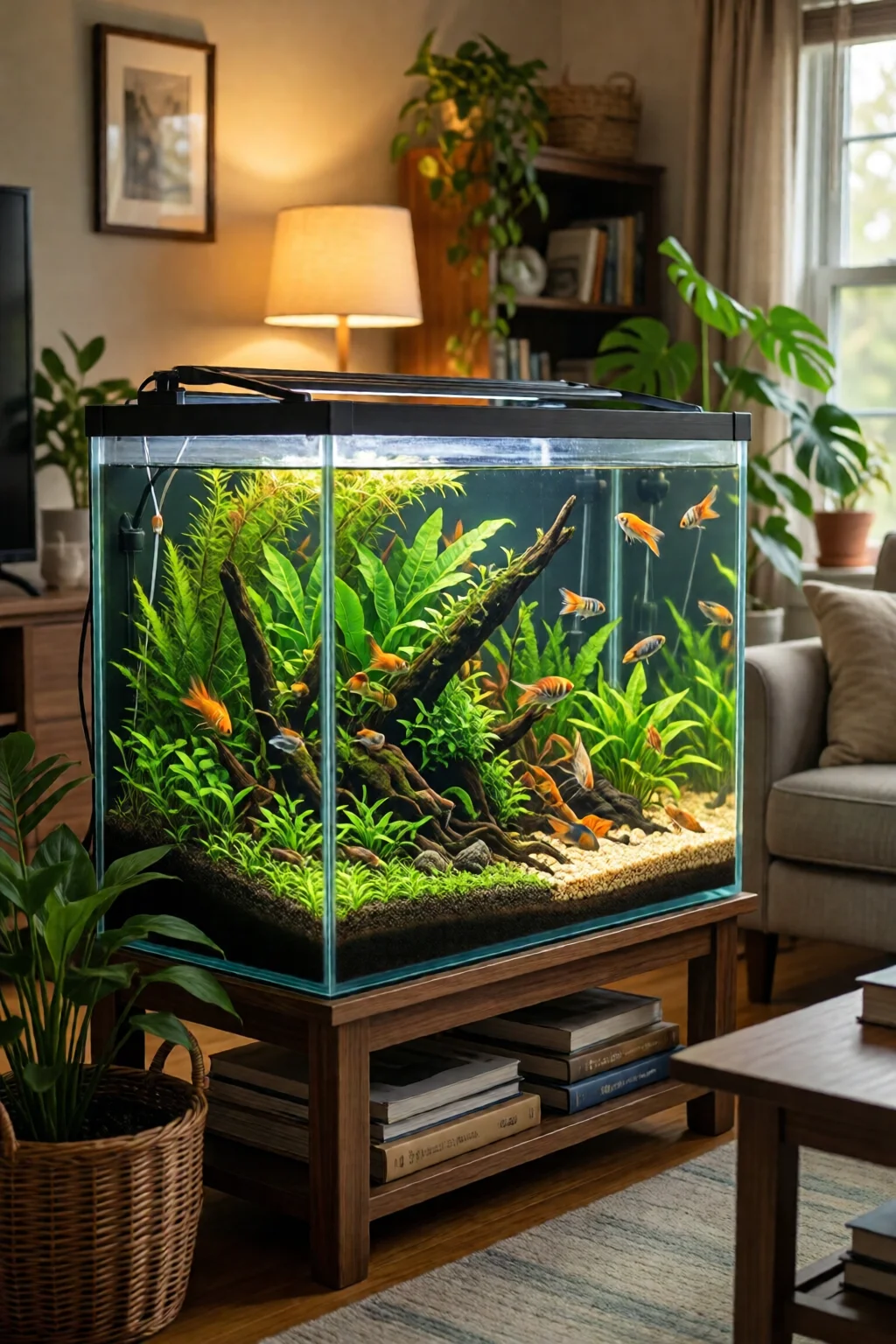
With careful planning, a 10‑gallon aquarium can support a lively community, a captivating shrimp biotope, or a striking single‑species display. Follow the cycle, respect stocking limits, and match water parameters to your chosen species. By investing in quality equipment (filter, heater, lighting) and maintaining a disciplined cleaning schedule, you’ll enjoy clear water, healthy inhabitants, and endless fascination in a modest space.
Frequently Asked Questions
Can I keep a betta with neon tetras in a 10‑gallon tank?
It’s not recommended. Bettas can be territorial and may stress neon tetras, leading to fin‑nipping and disease. If you want a betta, pair it with peaceful bottom‑dwelling shrimp or snails instead.
How long does the nitrogen cycle take in a 10‑gallon tank?
Typically 4–6 weeks. Monitor ammonia, nitrite, and nitrate levels daily; only add fish once both ammonia and nitrite read 0 ppm.
What is the ideal stocking density for a community tank?
A safe rule is 1 inch of adult fish per gallon. For a 10‑gallon tank, aim for 8–10 small fish (1 inch or less) plus a few shrimp or snails.
Do I need a separate heater for a shrimp‑only setup?
Yes. Shrimp thrive at 72–78 °F (22–26 °C). A 50‑W submersible heater maintains temperature stability in a 10‑gallon tank.
Where can I learn more about caring for plecos?
Check out our pleco fish care guide and diet for feeding, tank size, and compatibility tips.
3 commentaires sur « Best 10 Gallon Tank Stocking Ideas: Complete Guide for 2026 »