Getting a thriving freshwater aquarium up and running is one of the most rewarding projects you can tackle as a pet lover. In my ten‑year career as a fish‑keeping consultant, I’ve watched beginners stumble over the same avoidable pitfalls—over‑lighting, wrong substrate, or skipping the nitrogen cycle—only to watch their tanks turn into a murky mess. This guide walks you through every step, from choosing the right tank size to the first water test, so you can skip the guesswork and start enjoying crystal‑clear water and happy fish within weeks.
In This Article
- 1. Planning Your Aquarium: Size, Location, and Budget
- 2. Essential Equipment and How to Install It
- 3. Cycling the Tank: The Nitrogen Cycle Explained
- 4. Selecting and Introducing Your First Fish
- 5. Maintaining Water Quality: Ongoing Care Checklist
- Pro Tips from Our Experience
- Equipment Comparison Table
- Frequently Asked Questions
- Conclusion: Your First Steps Toward a Flourishing Freshwater World
Whether you’re dreaming of a planted paradise for neon tetras or a sleek community for guppies and dwarf gouramis, the process is surprisingly systematic. By the end of this article you’ll know exactly what equipment to buy, how long each stage takes, and which common mistakes to avoid. Let’s dive in and master how to set up a freshwater aquarium the right way.
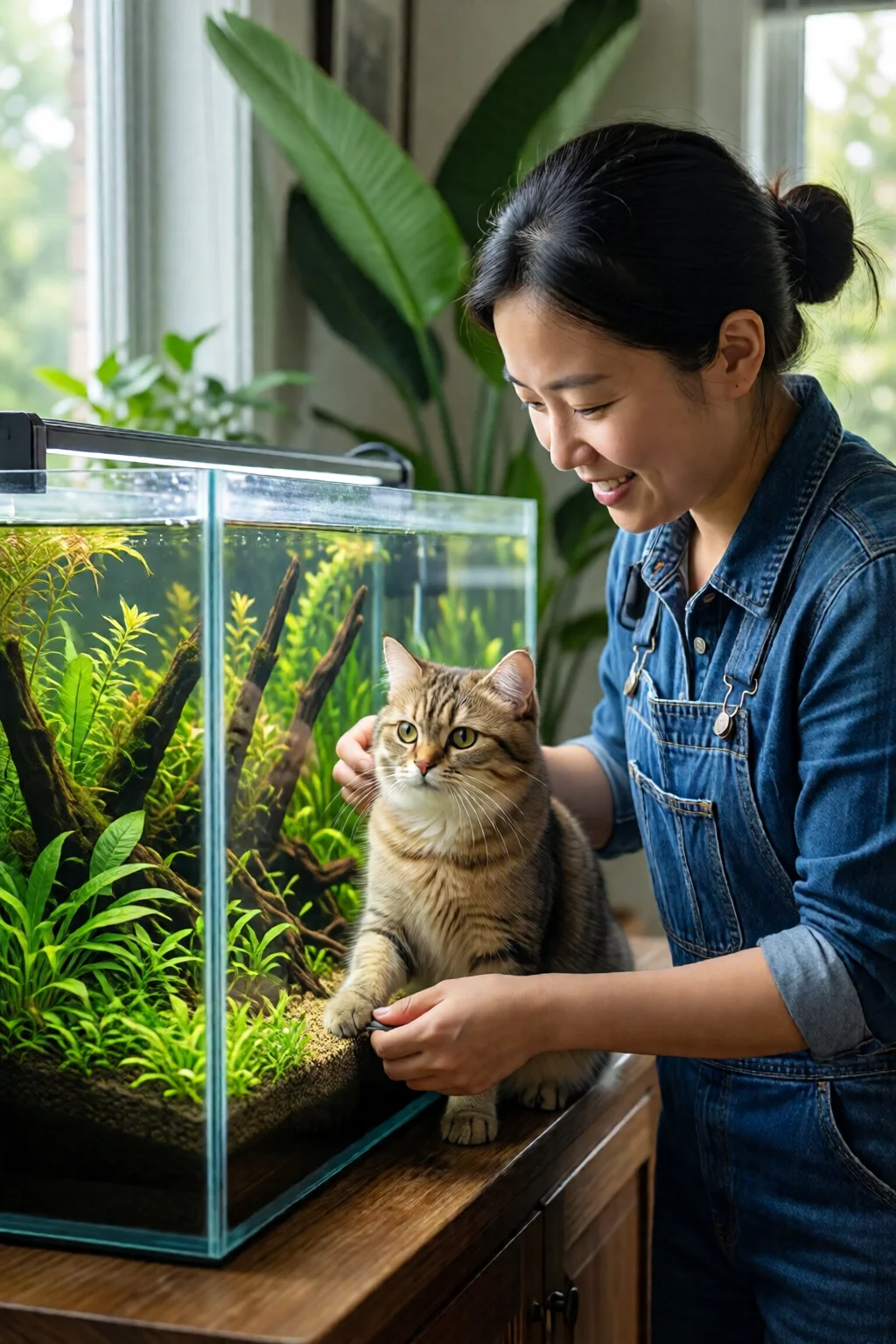
1. Planning Your Aquarium: Size, Location, and Budget
1.1 Determining Tank Size
The first decision is the tank’s volume. A 20‑gallon (75 L) long glass tank is the sweet spot for most beginners: it offers enough water mass to stabilize temperature, costs around $120‑$150 for the glass alone, and fits comfortably in a standard living‑room corner. If floor space is limited, a 10‑gallon (38 L) aquarium can work, but expect tighter water parameters and a steeper learning curve.
1.2 Choosing the Right Location
Place the tank away from direct sunlight, drafts, and heating vents. Sunlight encourages algae blooms—one mistake I see often is setting the tank near a window, leading to green water within two weeks. A sturdy, level stand that can support at least 1.5 times the tank’s weight when filled (a 20‑gallon tank with water and substrate weighs roughly 250 lb) is essential.
1.3 Budget Breakdown
Here’s a quick cost snapshot for a starter 20‑gallon setup:
- Tank & stand: $150
- LED hood (e.g., NICREW SkyLED 30W): $45
- Filtration (e.g., Fluval C4 Power Filter): $70
- Heater (50 W, EHEIM Jager): $30
- Substrate (fine sand, 5 lb): $25
- Water test kit (API Master Kit): $30
- Decor (driftwood, rocks): $40
- Total: ≈ $390
2. Essential Equipment and How to Install It
2.1 Filtration Systems
Effective filtration is the heart of a healthy aquarium. A canister filter like the Fluval C4 provides mechanical, chemical, and biological media in one unit, handling up to 30 gallons. Install it by positioning the canister below the tank, attaching the intake tube near the substrate, and the return near the water surface to ensure proper flow.
2.2 Heating and Temperature Control
Most tropical freshwater species thrive at 76‑80 °F (24‑27 °C). A submersible heater with an automatic thermostat maintains temperature within ±1 °F. After placing the heater on the tank’s side, let the water circulate for 30 minutes before plugging it in to avoid thermal shock.
2.3 Lighting for Plants and Fish
If you plan a planted tank, a full‑spectrum LED (e.g., NICREW SkyLED 30W) delivering 0.5 W per litre works well. Set the photoperiod to 8‑10 hours daily using a timer. For a “fish‑only” setup, a dimmer 20W LED suffices, reducing algae risk.
2.4 Substrate and Hardscape
Fine sand (grain size 0.2‑0.4 mm) is ideal for bottom‑dwelling species like Corydoras. Spread a 2‑inch layer, then rinse thoroughly to remove dust. Add driftwood (e.g., Seachem Bogwood) and slate rocks for visual interest; these also provide natural hiding spots.
3. Cycling the Tank: The Nitrogen Cycle Explained
3.1 Why Cycling Matters
New water contains no beneficial bacteria to convert toxic ammonia (from fish waste) into nitrite and then nitrate. The cycle typically takes 4‑6 weeks. Skipping it leads to “new‑tank syndrome,” where fish become lethargic or die within days.
3.2 Steps to Jump‑Start the Cycle
- Fill the tank with dechlorinated water (use a water conditioner like Seachem Prime, $12 per 500 ml).
- Add a source of ammonia: either a pinch of pure household ammonia (no surfactants) or 1 cup of frozen brine shrimp as a food source.
- Test water daily with an API kit. Expect ammonia to rise to 4‑5 ppm within 24‑48 hours.
- After 3‑5 days, nitrite will appear. Continue feeding the ammonia source.
- By week 3‑4, nitrate will accumulate while ammonia and nitrite drop to 0 ppm.
- Perform a 25‑30 % water change to reduce nitrate below 20 ppm before adding fish.
3.3 Monitoring Parameters
Maintain temperature at 78 °F, pH between 6.8‑7.2, and hardness (GH) around 6‑10 dGH. Use the API kit to log readings; a simple spreadsheet helps spot trends.
4. Selecting and Introducing Your First Fish
4.1 Choosing Compatible Species
For a 20‑gallon community, start with hardy, small‑shoaling fish: 6 neon tetras, 4 harlequin rasboras, and a single peaceful bottom dweller like a molly fish. This stocking level (≈1‑1.5 inches of fish per gallon) keeps bioload manageable.
4.2 Quarantine and Acclimation
Never dump fish directly into the tank. Float the sealed bag in the aquarium for 15 minutes to equalize temperature, then slowly add 1 cup of tank water to the bag every 5 minutes for 30 minutes. Release the fish using a net, leaving the bag behind to avoid contaminating the tank.
4.3 Feeding Schedule
Offer high‑quality flake food (e.g., Hikari Tropical Micro, $7 per 100 g) twice daily, only what can be consumed in 2‑3 minutes. Overfeeding spikes ammonia levels.
5. Maintaining Water Quality: Ongoing Care Checklist
5.1 Weekly Tasks
- Test ammonia, nitrite, nitrate, pH, and temperature.
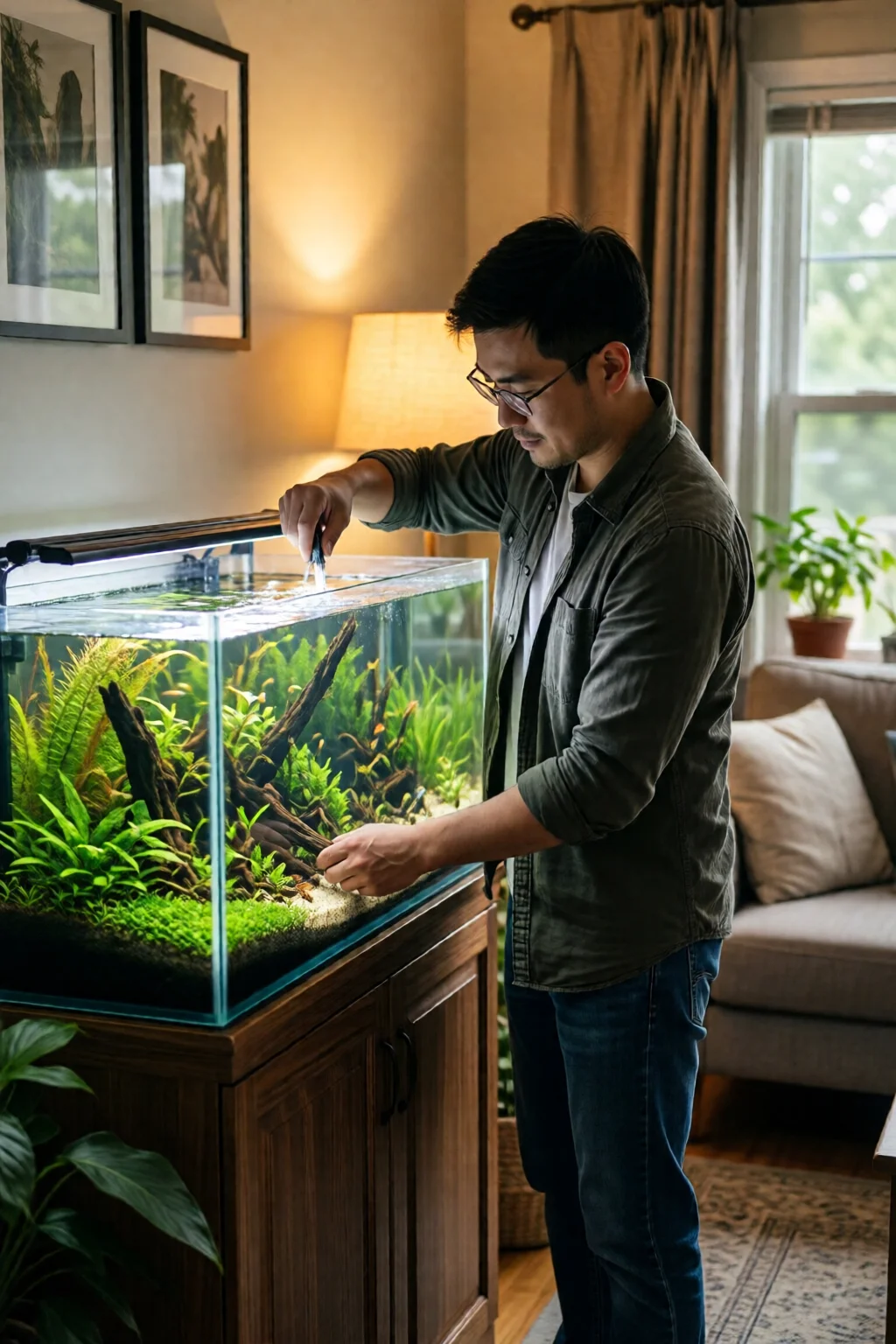
- Perform a 20‑25 % water change using a siphon to vacuum substrate.
- Trim any fast‑growing plants to prevent shading.
5.2 Monthly Tasks
- Clean filter media: rinse mechanical sponges in tank water (never tap water) and replace chemical media every 2‑3 months.
- Inspect equipment for wear—replace heater seals if bubbling appears.
- Rotate décor to disrupt algae “hot spots.”
5.3 Seasonal Adjustments
In winter, room temperature may drop; a 100 W ceramic heater can supplement the primary 50 W unit. In summer, ensure adequate airflow around the tank to prevent overheating of the filter motor.
Pro Tips from Our Experience
- Start with a planted tank. Live plants like Java moss and Amazon sword absorb nitrates, reducing the frequency of water changes.
- Use a magnetic algae scraper. It reaches the glass without breaking the seal, saving you from costly re‑seal jobs.
- Invest in a reliable power outage backup. A 12‑V UPS (≈$60) keeps the filter and heater running for at least 30 minutes, preventing a sudden crash in water parameters.
- Don’t over‑stock. A common rule is “one inch of fish per gallon” after the first month; exceeding this leads to chronic ammonia spikes.
- Consider a “starter kit” bundle. Many online retailers (e.g., MarineLand) offer 20‑gallon kits with tank, stand, filter, and heater for $399—often cheaper than buying pieces separately.
Equipment Comparison Table
| Component | Budget Option | Mid‑Range Option | Premium Option |
|---|---|---|---|
| Filter | Fluval C2 (up to 15 gal) – $45 | Fluval C4 (up to 30 gal) – $70 | EHEIM Classic 2213 – $120 |
| Heater | Marineland Mini 50 W – $25 | EHEIM Jager 50 W – $30 | Fluval E Series 100 W – $55 |
| LED Light | NICREW SkyLED 30W – $45 | Finnex Planted+ 30W – $70 | Current USA SunPower 50W – $110 |
| Substrate | Fine sand (5 lb) – $25 | Eco-Complete (plant substrate) – $45 | Fluval Stratum – $60 |
Frequently Asked Questions
How long does the nitrogen cycle take?
Typically 4‑6 weeks, but you can accelerate it with a bacterial starter like Seachem Stability (about $15 per 100 ml).
Can I use tap water directly?
No. Tap water contains chlorine or chloramine that kills beneficial bacteria. Treat it with a water conditioner such as Seachem Prime before adding to the tank.
What fish are good for a beginner 20‑gallon tank?
Hardy community species like neon tetras, harlequin rasboras, guppies, and a single dwarf gourami or a angelfish (if you keep the tank well‑planted and dimly lit).
Do I need a separate heater for a planted tank?
A single reliable heater (50 W for a 20‑gallon tank) is sufficient if you maintain a stable room temperature. Add a second heater only if you experience frequent temperature swings.
How often should I change the water?
Perform a 20‑25 % water change weekly during the first two months of cycling. Once the tank is stable, a 15‑20 % change every two weeks is adequate.
Conclusion: Your First Steps Toward a Flourishing Freshwater World
Now that you understand how to set up a freshwater aquarium—from budgeting and equipment choice to cycling, stocking, and maintenance—you’re ready to turn that empty glass box into a living, breathing ecosystem. Remember the three pillars: proper filtration, stable temperature, and diligent water testing. Follow the timeline, respect the nitrogen cycle, and introduce fish gradually. In a month or two you’ll see your neon tetras darting among the leaves, and you’ll know the effort was worth every drop of water.
Take the first step today: purchase a 20‑gallon tank, set it up according to this guide, and enjoy the calm and color it brings to your home.
2 commentaires sur « How To Set Up A Freshwater Aquarium – Everything You Need to Know »