Ever wonder which filter will keep your aquarium crystal clear without draining your wallet, while also protecting the delicate health of your fish?
In This Article
- What You Will Need Before You Start
- Step 1 – Calculate Your Tank’s Required Flow Rate
- Step 2 – Choose the Filter Type That Matches Your Lifestyle
- Step 3 – Match Flow Rate to Tank Size and Stock
- Step 4 – Install and Prime the Filter
- Step 5 – Monitor, Test, and Fine‑Tune
- Common Mistakes to Avoid
- Troubleshooting & Tips for Best Results
- FAQ
- Summary – Your Path to Crystal‑Clear Water
What You Will Need Before You Start
- Accurate tank dimensions (length, width, height) – you’ll need the volume in gallons.
- Know your stock: species, number of fish, and average size. A single 12‑inch goldfish demands more bio‑filtration than a trio of neon tetras.
- List of filter types you’re open to (hang‑on‑back, canister, internal, sponge, under‑gravel).
- Basic tools: screwdriver, scissors, silicone sealant (if you opt for a canister), and a bucket for water changes.
- Measurement tape, notebook, and a calculator for flow‑rate math.
Step 1 – Calculate Your Tank’s Required Flow Rate
Most filter manufacturers rate their units in gallons per hour (GPH). A good rule of thumb is to turn over the entire water volume 4–6 times per hour for tropical setups and 2–3 times for heavily planted or goldfish tanks. For example, a 30‑gallon community tank housing 15 tetras and a few dwarf gouramis needs roughly 150 GPH (30 gal × 5). If you plan a 55‑gallon goldfish tank, aim for 110 GPH minimum, but many hobbyists push to 165 GPH to handle the extra waste load.
Step 2 – Choose the Filter Type That Matches Your Lifestyle
Here’s a quick cheat sheet based on real‑world performance:
- Hang‑On‑Back (HOB) – Ideal for beginners. The Fluval C4 Power Filter (approx. $79, dimensions 13 × 7 × 6 in) delivers 250 GPH, perfect for 20‑40 gallon tanks.
- Canister – Best for high‑bio‑load or heavily stocked tanks. The Eheim Classic 250 (price $199, 13 × 12 × 19 in) handles up to 250 GPH with multi‑stage media chambers.
- Sponge – Safe for fry and shrimp. The Hydro Sponge Filter 2‑inch (around $12) offers 100 GPH and provides biological filtration without risking tiny critters.
- Internal – Good for tanks under 20 gallon where space is at a premium. The Marineland Penguin 150 (price $59, 5 × 5 × 6 in) fits neatly inside a 10‑gallon tank and circulates 150 GPH.
- Under‑Gravel – Mostly outdated, but still viable for low‑tech setups with minimal décor.
In my experience, the AquaClear Power Filter 70 (price $89, 9 × 5 × 5 in, 70 GPH) strikes a sweet balance for 30‑gallon community tanks because its adjustable flow and modular media trays let you tailor mechanical, chemical, and biological filtration.
Step 3 – Match Flow Rate to Tank Size and Stock
Take the flow rating from the product spec sheet and compare it to the target GPH you calculated. If the filter’s rating is 1.5‑2× higher than needed, you’ll likely need a flow‑restrictor or a baffle to prevent strong currents that stress fish like bettas or dwarf gouramis. Conversely, a filter rated lower than your target will struggle, leading to cloudy water and higher ammonia spikes.
Step 4 – Install and Prime the Filter
- Rinse all filter media in dechlorinated water. Do not use tap water; chlorine can kill beneficial bacteria.
- Assemble the filter according to the manufacturer’s diagram. For canisters, place the unit on a stable surface, attach the inlet and outlet hoses, and secure the silicone seal.
- Prime the pump: fill the filter housing with water, then use the built‑in priming button (if available) or manually suction water with a turkey baster.
- Turn the unit on and observe for bubbles or leaks. Adjust the flow knob to about 75 % of maximum for the first week.
- Run a water test (ammonia, nitrite, nitrate) after 48 hours to ensure the biological media is colonizing.
Step 5 – Monitor, Test, and Fine‑Tune
During the first month, test water parameters every three days. If ammonia spikes above 0.25 ppm, increase biological media or reduce feeding. A well‑cycled tank with a properly sized filter should show zero ammonia and nitrite, with nitrates below 20 ppm. If nitrates climb, consider adding live plants or performing a 20‑30 % weekly water change.
Common Mistakes to Avoid
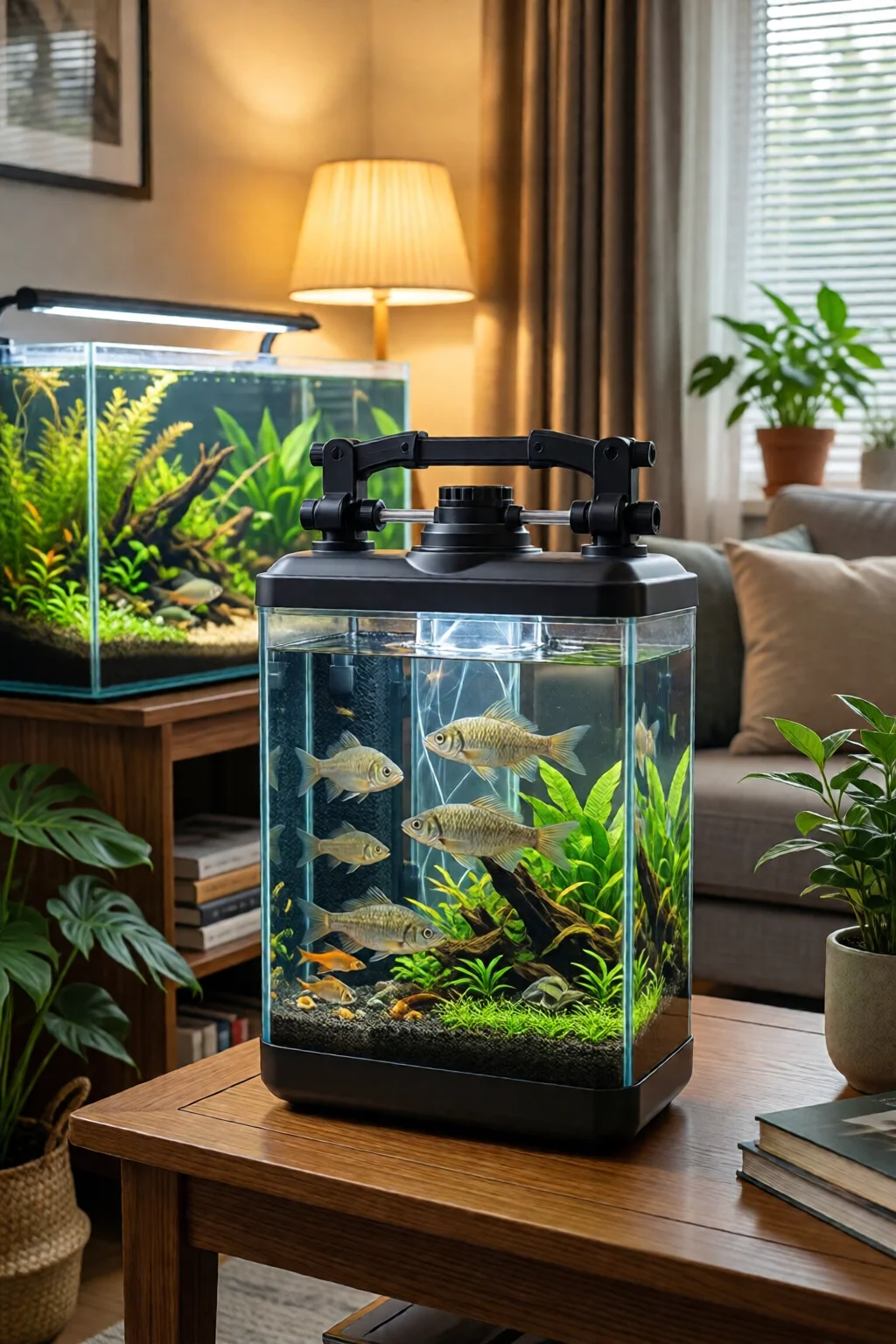
- Undersizing the filter. One mistake I see often is buying a cheap 50‑GPH filter for a 55‑gallon goldfish tank. The result is constant cloudiness and stressed fish.
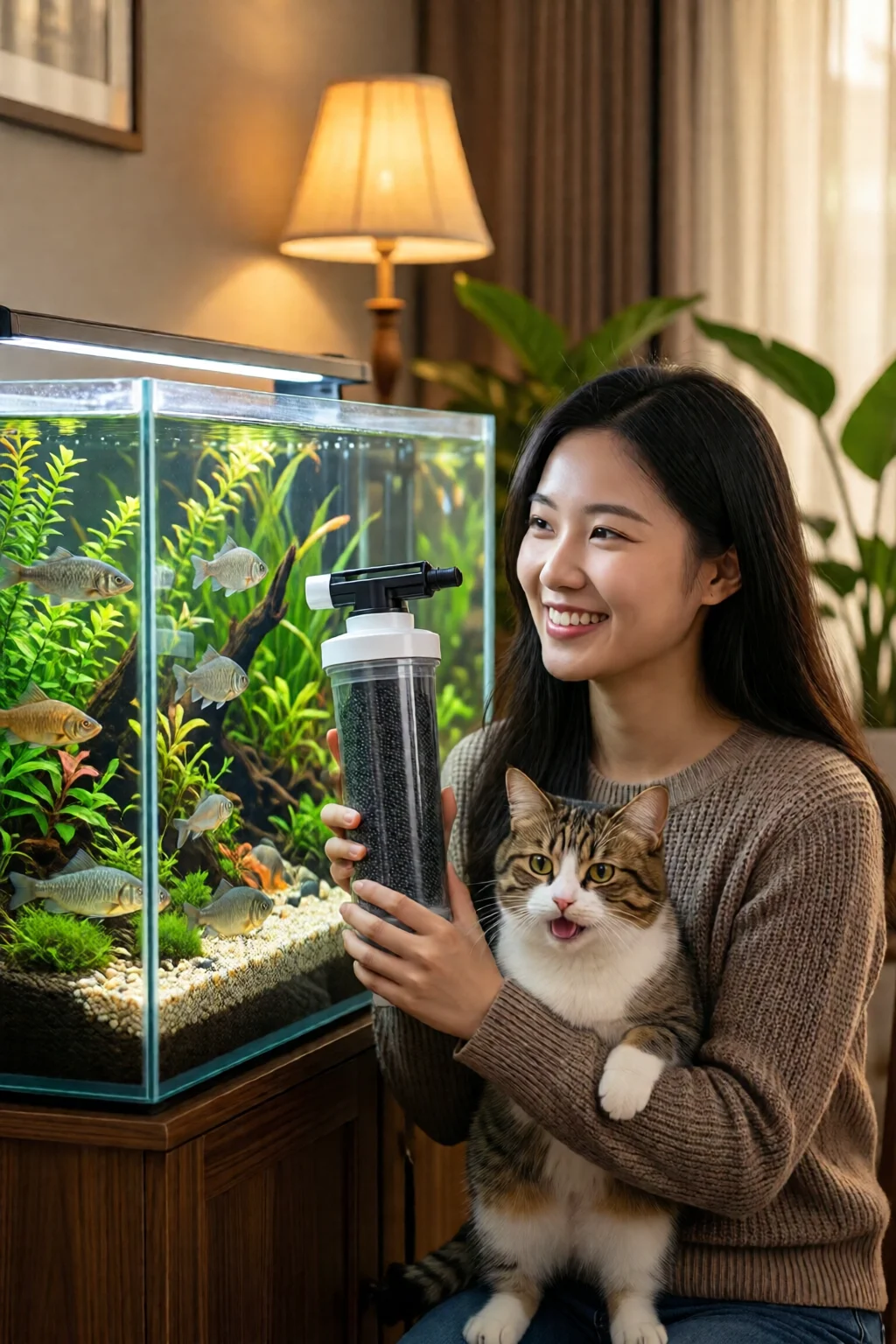
- Choosing the wrong media. Using only mechanical sponges without bio‑media eliminates the bacteria that break down ammonia. Pair a carbon block with bio‑balls for a balanced approach.
- Neglecting flow direction. Placing the outlet directly at the surface can cause surface scum. Aim the outflow toward the middle or use a diffuser.
- Skipping regular cleaning. Rinse filter pads in tank water once a month. Over‑cleaning with tap water wipes out the beneficial colonies.
- Forgetting the tank’s shape. Long, narrow tanks need multiple intake points to avoid dead zones where waste can accumulate.
Troubleshooting & Tips for Best Results
Problem: Water stays cloudy after a filter change.
Solution: Perform a partial water change (20 %) and add a dose of liquid bio‑starter (e.g., Seachem Stability). Run the filter at 100 % for 24 hours, then reduce to 70 %.
Problem: Filter noise spikes at night.
Solution: Check for air bubbles in the impeller. Disassemble the pump, remove trapped air, and re‑prime.
Problem: Fish are hiding constantly.
Solution: Measure flow with a handheld flow meter. If it exceeds 0.3 gpm per inch of fish length, add a flow‑restrictor or reposition the outlet.
For a holistic approach, consider integrating live plants such as Java fern or Amazon sword, which supplement biological filtration and lower nitrate levels. Also, always cycle a new aquarium before adding a full stock; a rushed cycle is a common cause of filter failure.
FAQ
How often should I replace filter media?
Mechanical media (sponges, floss) should be rinsed every 4‑6 weeks. Chemical media (carbon) typically lasts 4 weeks, while biological media (bio‑balls, ceramic rings) can stay for 6‑12 months unless the flow drops dramatically.
Can I use a canister filter for a planted tank?
Absolutely. Canisters are excellent for heavily planted tanks because they provide high flow without disturbing delicate leaf tissue. Just set the flow to 30‑40 % of maximum and use a spray bar to diffuse water gently.
What’s the difference between GPH and CFM?
GPH (gallons per hour) measures water volume moved per hour, while CFM (cubic feet per minute) is a metric unit. To convert, multiply CFM by 7.5 to get GPH. Aquarium filters usually list GPH for hobbyist convenience.
Is a sponge filter enough for a 20‑gallon community tank?
For a lightly stocked 20‑gallon tank (5‑6 small fish), a high‑flow sponge (≈150 GPH) can suffice, especially if you have live plants. However, most hobbyists prefer adding a HOB or canister to boost mechanical filtration and keep the water clearer.
Do I need a separate filter for a shrimp tank?
Shrimp are sensitive to strong currents and fine particles. A gentle sponge filter (50‑80 GPH) provides adequate bio‑filtration without sucking up baby shrimp. Pair it with occasional water changes of 20 %.
Summary – Your Path to Crystal‑Clear Water
Choosing the best fish tank filters reviewed isn’t about grabbing the most expensive unit; it’s about matching flow rate, media, and form factor to your tank’s size, stock, and aesthetic. Measure, calculate, and then pick a filter—whether it’s a Fluval C4 for a starter community, an Eheim Classic 250 for a demanding goldfish setup, or a humble sponge for a delicate shrimp biotope. Install carefully, monitor water parameters, and avoid the common pitfalls listed above. With these steps, you’ll enjoy a stable, sparkling aquarium that keeps your fish thriving for years to come.
6 commentaires sur « Best Fish Tank Filters Reviewed: Complete Guide for 2026 »